


Border War! Vermont vs. New Hampshire Skiing Part 13 – Sugarbush
—by Jay Flemma
Special to Slave to the Traffic Light Adventure Magazine—
WARREN, VT – Any conversation of the greatest ski areas in North America must include Sugarbush. End of story. Sugarbush is too important historically – it is the cradle of extreme skiing in America. Sugarbush has too much gnar – taken as a whole, Sugarbush may feature the steepest steeps, the narrowest narrows, and the bumpiest moguls in the east. And Sugarbush has been too integral in the careers and development of too many skiing icons to be left out of the discussion, despite its east coast location and frequent lousy weather.
It also may be one of the most underrated resorts in America. Killington and Stowe have more name recognition nationally. Vermont and New Hampshire are ground zero for skiing east of the Rockies, so there is competition everywhere you look. And the resort passing into Alterra’s hands signaled the death of Sugarbush’s once inimitable skiing culture.
But nevertheless, despite former glory fading, Sugarbush is still an imperative. All too often, when putting together your bucket lists and top “USA Rankings,” you readers and reviewers take far too long to get to Sugarbush’s name, and that’s a mistake. Because if you think you are good, and if you love basking in skiing old time vibes, your skiing education is incomplete without a week at Sugarbush.
OLD SCHOOL
Sugarbush’s founder was Luther Damon Gadd, son of engineering executive Luther Gadd. After serving in the Navy during World War II, Gadd graduated from Yale and became engaged to Pennsylvania native Sara Rohm, marrying her in 1950. In December 1952, the couple purchased the Ulla Lodge (later known as the Hyde Away Inn) in Fayston, Vermont. At the time of the purchase, nearby Mad River Glen was one of only two chairlift-served ski areas in Vermont. The general manager at the time was Jack Murphy.
Then in the spring of 1957, Gadd had applied for a lease of National Forest land in Lincoln Peak for the purpose of developing his own ski area. Development plans moved forward, and Jack Murphy left his post at Mad River Glen to be part of the new Sugarbush Valley Corporation, and in the fall of 1957, the group received preliminary federal approval for the $1.4 million ski development from the United States Forest Service.
On April 30, 1958, Gadd announced permits had been secured and that Sugarbush would open in December. According to New England Ski History:
“The cornerstone of the plan was a 9,300 foot long, 2,388 foot vertical three-person gondola, reportedly the longest single-span lift in America. Around this time, the corporation owned 350 acres of land and leased 600 acres from the Green Mountain National Forest. Construction started on April 28, 1958….Sugarbush kept the ball rolling as it headed into its sophomore season. A new Carlevaro & Savio double chairlift was installed on a peak located between Nancy Hanks Peak and Cutts Peak, complete with a mid-station. Called Castlerock, the new complex quickly developed a reputation for excellent expert skiing with the billing ’hot shots only.’ The new Castlerock lift passed its inspection at the end of December 1959, a few weeks after the start of the ski season. The lift was either installed with a mid-station or soon had one installed. Sugarbush enjoyed a strong Christmas weekend, recording 2,500 visitor”s, but was forced to close over New Year’s weekend due to warm rain. The season subsequently rebounded, with Mike de Sherbinin of the Swanton Courier noting that on the Saturday of Washington’s Birthday weekend, Jester ‘was so crowded it resembled the subway most of the skiers had left behind only the day before.’”
Meanwhile, in early February 1962, Walter Elliott announced that he acquired financing and land to begin construction of a ski area to the north of Sugarbush on Mt. Ellen and General Stark Mountain. Elliott told the Times Argus that his ski area could become the “biggest and best in the east.” This would ultimately become first “Sugarbush North” and later the Mt. Ellen side of the modern Sugarbush resort we ski today. This terrain is some of the fiercest in all the Mad River Valley.
On May 1, 1964, Sugarbush announced that world and Olympic champion racer Stein Eriksen had been hired as its next ski school director. Eriksen had most recently run ski schools at Aspen Highlands, Pine Knob, and Boyne Mountain. Sigi Grottendorfer took over as ski school director for the 1967-68 season, as Stein Eriksen departed for Snowmass. That season saw a massive growth in snowmaking capacity, an expansion of the base lodge, and the opening of Middle Earth at Castlerock.
“That’s when Sugarbush first became the dazzling gem it remains for so many decades. It developed the hippie culture in the ‘70s, when kids who dreamed of skiing every day of their lives would gather there. Yes, it also had a stigma of Mascara Mountain – go there to see and be seen – but with the influx of the Austrians and the Swiss and the young, gung ho locals, there was a strict culture on technique and an open mind on how to teach it,” explained Author Ed Brennan, whose new book, “Just Exactly Perfect: Cautionary Tales of Skiing and Being in the Mad River Valley,” is racing up the bestseller lists in the ski industry as must have journalism.
“Sugarbush attracted SOULFUL skiing,” Brennan continued continued. “Meditation camps met there, and alternative culture blossomed. A free lifestyle led to freestyle skiing. And that led to woods skiing and bump skiing – so we applied the technique of piste to a different place, the freestyle world!”
It is impossible to understate Sugarbush’s importance in this regard. Without Sugarbush, would we even have freestyle?
Wait…don’t answer that…
So, suddenly there’s Stein Eriksen was doing flips all over the mountain, something the American ski world had never seen before and marveled at. Now director of the hottest ski school in the country, the flashy, handsome Eriksen brought the glamour and flash of European style and the fearlessness of an astronaut to tiny Mad River Valley. Suddenly it was the epicenter if the American ski scene. Celebrities and jet setters put Sugarbush in their regular winter rotations just to take lessons from the most famous skiers in the world. Yet right under their noses, an entirely new offshoot of the sport was being born, and born with reckless abandon by the freest of spirits.

“A ski instructor in Europe is a highly regarded figure around town; it carries respect and cache,” explain Brennan who taught there between 1987 and 1989, with Sigi Grottendorfer and Hartmut Helmstreet, two undoubtable legends. “Everywhere they went they commanded attention and garnered admiration for their perfection. And they demanded that perfection from their students and the teachers! They were always inspecting us with these searing looks; when they looked at you, they let you know they were expecting more. Hartmut once sneered at a Velcro patch I was wearing, grousing, ‘Zomezing is not rrrright.’ He ripped it off, put on straighter and said, ‘Aha, now just rrrright!’ And we had to ski and teach with perfection as well.”
Yet that perfection yearned for expansion. The instructors and an intrepid corps of local legends like Egan Brothers Dan and John, Hoover Austin, and Chris Parkinson, began doing far more then just hard-charging fall lines and shredding moguls. Sugarbush’s big mountain terrain opened whole new worlds to these world class skiers who as Brennan puts it, “yearned for expansion.” not just the European and Olympic pros, but the locals who leaned under them. And through them big air, off piste became the pulse of a new cultural zeitgeist.
Warren Miller tapped into this momentum at the perfect time and through the perfect medium, video. Freestyle skiing exploded with thermonuclear power and Sugarbush providing the critical fusion to a great extent. Soon everyone flocked to theatres to see the highlighter-colored onesies of the Egan Brothers and their pals launching massive air off staggering heights in far-flung corners of the world most people only dream of seeing, let alone skiing.
To its credit, Sugarbush embraced this ethos, cultivated and nurtured the scene as a British gardener would lovingly tend to her roses. Why wouldn’t it? Sugarbush’s massive footprint over some of the wildest terrain in all Vermont was an ideal teaching ground for Eriksen and his team to teach creativity over traditional racing skills. Hotdogging became a thing and a whole new offshoot of the sport was born – a vibrant, flashy one, but one with artistic spectacle and undoubtable gymnastic ability. As the ‘80s progressed, Sugarbush’s embrace of this culture naturally paved the way for dedicated terrain features—like the famed Gondolier park at Lincoln Peak—to be built in the 1990s
THE MODERN ERA

[Author’s Note: The mid-90s saw the rise of developer Les Otten as one of the seminal figures in the snowsports industry. While tine and space constraints limit the amount of time we can spend here discussing the Otten years at Sugarbush – and this we lean on New England Ski History to help – we will be interviewing Otten in depth in our chapter on the soon to be reopened Balsams Resort.]
According to New England Ski History:
“In October of 1994, Les Otten’s LBO Resort Enterprises Corp. purchased Sugarbush for a reported $9.1 million….[and] after years of stalemate under previous ownership, Otten approached the towns and environmental opposition groups and told them he “needed to connect the mountains, develop a snow-making pond, repair the infrastructure and build a hotel.” Moving quickly, the parties were able to find compromises that allowed the projects to move forward.
For the 1995-96 season, a staggering four new quad chairlifts were installed at Sugarbush, three of them detachables. Perhaps the most eye-catching of the new lifts was the 11,000 foot Slide Brook Express chairlift, which allowed skiers to go from Sugarbush South to Sugarbush North in only a few short minutes, without having to take off their skis. In addition to the Slide Brook, Sugarbush South saw the installation of its first detachable chairlifts, with the Gatehouse and Super Bravo quads providing high speed service to the lower portion of the mountain. Not only that, but a 63 million gallon snowmaking pond was constructed. Overall, Sugarbush received an estimated $17 million in improvements that year.
The following summer, LBO Resort Enterprises Corp. was rolled into American Skiing Company. Large scale capital investments were focused elsewhere.”
Sugarbush still ran in the red despite Otten’s diligence. So in 2001, his American Ski Company sold Sugarbush to Win Smith, beginning twenty years of independent ownership for the resort. Smith was the son of Merrill Lynch partner Winthrop H. Smith Sr., and he wasted no time in improving the area, as it replaced the Castlerock double chairlift that same year. Smith moved to Vermont full time and took over day-to-day management of the resort in 2004. Further major infrastructure upgrades followed.
“Win Smith and Co. put in some much needed investments through the beginning and middle of their tenure, but certain lifts were aging towards the end of their reign. When Alterra took over, they unfortunately did not address that aging infrastructure in a timely manner,” opines snowsports journalist and videographer Sam Weintraub of Peak Rankings. “Some might argue this led to high profile breakdowns, most notably the GMX and North Ridge Express being down on the Mt. Ellen side at the same time, On the plus side, Alterra is finally starting to replace some of these aging lifts, with the North Ridge express slated for replacement in 2027. However at least thre other high speed quads are over three decades old with no official replacement in sight.”
After nearly 20 years of independent ownership, Smith announced in November 2019 that Sugarbush had been sold to Alterra Mountain Company. The acquisition was completed in January 2020, only two months before COVID-19 shut downs devastated the Vermont economy.
A WORD ABOUT JOHN EGAN AND THE LOST ETHOS OF SUGARBUSH
Has the move to Alterra made Sugarbush too corporate? Has Sugarbush lost its identity and soul? It’s raison d’etre? It’s inimitable identity
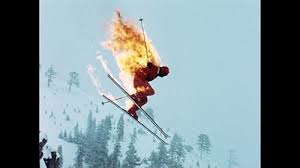
Many people around the snowsports world say “Yes.” And John Egan not being at Sugarbush in some capacity is the perfect microcosm for that loss. He was a huge catalyst of that whole vibe.
He was Mr. Sugarbush.
In 2001 after American Ski Company had to jettison some of its oversized portfolio, Win Smith did everything he could to continue to foster the freeriding spirit of the Mad River Valley that had become Sugarbush’s inimitable energy.
The Egan brothers and John’s unofficial position as the mountain’s greatest ambassador were the driving force behind that culture, as were those locals that lived through the Sigi and Helmut years, then stayed to raise families of their own. But Sugarbush still ran in the red, and in 2020 Alterra swooped in and instituted diminishment of the local flavor and culture, including eliminating John’s ambassador position.
With John gone, a whole lot of stoke faded into ancient history.
The move to IKON/Alterra resulted in a significant loss of Sugarbush’s once incomparable identity. Is Sugarbush still great? Certainly. But corporatism is the antithesis, indeed the Kryptonite of the stoke. And Sugarbush lost a lot of stoke the day they lost John.
Still, if you have one tour of the East, and one tour only, Sugarbush must be included. I recommend Whiteface, Sugarbush, Saddleback, Jay Peak, and Cannon: those are the absolute imperatives of the East. After that, don’t miss Magic, Attitash, Killington, Waterville Valley, Sugarloaf, and Sunday River.
MOUNTAIN GAZETTEER
With the exception of the gondola being eliminated and the Slide Brook Express added to connect Mt. Ellen to Lincoln Peak, Sugarbush remains much the same as it was in the glory days of “Sugarbush North,” the heady, halcyon ‘60s, ‘70s and ‘80s.
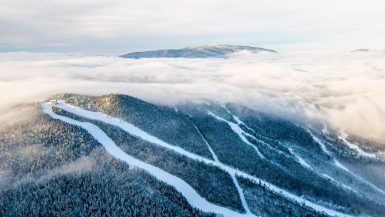
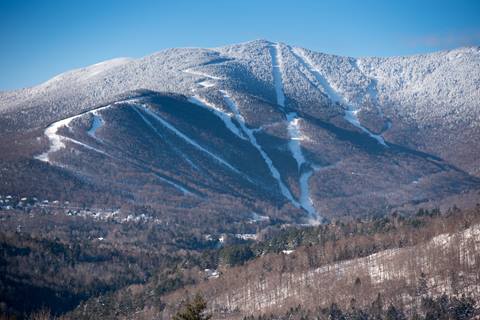
The resort has four peaks on the Lincoln Peak side – from skier’s right to left, Gabb, Lincoln, Castlerock, and North Lynx – and two peaks on the Mt. Ellen side, Mt. Ellen and Inverness. The two sides were connected in 1995 when the nearly two-mile long Slide Brook Express debuted, a quad chair that traverses the Slide Brook Basin for a whopping 11,012 feet in total. Before that, you skied one or the other or did a lot of hiking at dusk.
Sugarbush boasts a strong, often steep vertical drop, 2,400 feet of vertical from the summit of Lincoln Peak (elevation 3,975 ft.) to its base lodge (elevation 1,575 ft.) and 2,600 feet of vertical from the summit of Mt. Ellen (4,083) to its base lodge at 1,483 feet. That’s the third largest vertical drop in the east, behind only Sugarloaf and Killington, heady company. Its skiable footprint is also sweeping, covering 4,000 acres total with 508 acres of skiable terrain. That’s roughly 53 miles of trails and 11 mapped glades, as well as gargantuan adjacent areas for off piste adventures.
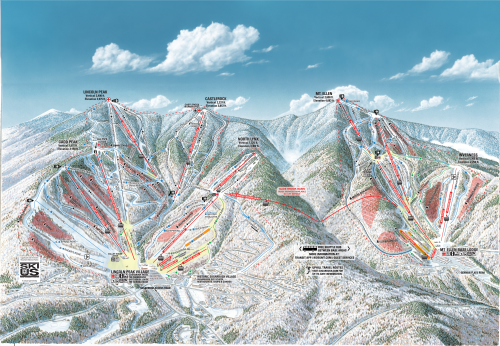
There are 111 trails at Sugarbush, 72 at Lincoln Peak, and 39 at Mt. Ellen. The split between novice-intermediate-expert is one of the best breakdowns in all of skiing: 20% novice, 45% intermediate, and 35% expert. Happily, everything at Sugarbush is equal to or harder than its designation on the trail map. Take the map seriously, especially the double black diamond runs. This isn’t Pennsylvania or Massachusetts; it is the apex of Vermont’s gnar and a cradle of extreme skiing in America. So be ready to shred or Sugarbush will shred you.
Better still, every trail pod at Sugarbush has interesting runs. Trails never feel the same or seem forced into rows like a cornfield. The variety of terrain is downright staggering, with just as many sidecountry and backcountry adventures to explore, including the Slide Brook Basin and the woods off the Castlerock area.
Sugarbush has never been known for the best snow, nor the best snow coverage, with only 70% snowmaking, though some areas like Castlerock and the Paradise run are deliberately kept ungroomed. While it once had old slow lifts, since the turn of the millennium, most of Sugarbush’s lifts have been replaced.
LINCOLN PEAK SIDE
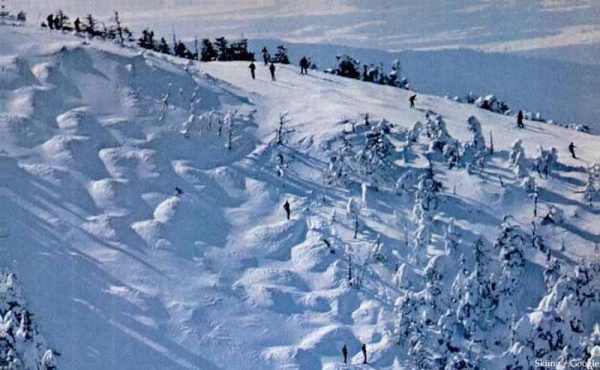
This side is the Sugarbush of old, the original, before the merger with Sugarbush North…errr..the Mt. Ellen side. The old gondola is gone, replaced by the Heavens Gate Chair which services the Lincoln Peak Summit. Organgrinder still is the centerpiece of Lincoln Peak, although precious few get to try it, conditions usually being dicey at best. When open though, it is a true test of mettle: criminally narrow, steep at a goat path, bumped out like a measles breakout, and usually ice-tastic. It used to be the lift line for the gondola. Oh, the entertainment that provided, especially in rough weather!
Starting from looker’s left, skier’s right on the map, the Valley House Quad is where Sugarbush’s seasons traditionally begin and end. Iconic runs include Spring Fling and Snowball, where hotties in bikinis will be shredding every April. Experts will lap the gloriously bumped out Stein’s run, named for instructor Stein Erikson, the Mall, (the criminally narrow lift line) and the aptly named Twist. The Super Bravo Express Quad terminates a little further up Gadd’s Peak, providing access to a midstation, Allyn’s Lodge, and Downspout and the Lower Organgrinder, as well as a smattering of lower mountain intermediate trails.
The summit of Lincoln Peak is accessible only by the Heaven’s Gate Quad, but the view from atop the mountain one of the most breathtaking panoramas in the east, absolutely dazzling. On clear days, one can see clear across the Mad River Valley over the Green Mountain’s vast expanses. Jester is one of the most splendid summit runs anywhere in America, while expert runs Paradise and Ripcord are among the gnarliest runs east of the Rockies. And of course Organgrinder, the former lift line of the old gondola and still the most direct way down form the summit, belongs in the Pantheon of Greatest Ski Runs in the East. Only Cannon Mountain’s DJ’s Tramline or Jay Peak’s 601->Mickey can compare for sheer relentlessness in both steeps and narrowness. And when bumped out, it’s a meat grinder, not an organ grinder. But even that is just a warm up for what awaits the next summit over.
CASTLEROCK
This is the vortex, the pulse of the zeitgeist, the absolute lightning strike. When you ski the Castlerock Double you step back in time to the 1960s. Every trail on the Castlerock pod is white-knuckle, high-flying, hair-raising wildness. Even before you get on the lift, warning signs blare at you from every direction: “EXPERTS ONLY!” “WARNING!” “NO NOVICES!” and my personal favorite, “DID WE MENTION ROCKS?!”
Many industry insiders agree – there is no tougher trail pod in the east than Castlerock. Not Whiteface. Not Killington. Not Sunday River. Castlerock. Full stop. And it’s been that way since it debuted all the way back in 1960.
“It’s set off in its own little playground, and it’s a world away from anything else at the resort. If you weren’t paying attention or looking for it, you might not even see Castlerock,” Ed Brennan explains excitedly, recalling his glory years of the ‘80s and ‘90s as in instructor. “There is gonna be some air involved. The trails here are too steep and too narrow for wide, across the fall line turns; you absolutely have to ski the fall line, and that means you have to clear rocks. There is a reason why it’s called CastleROCK!”
That and it rocks metaphorically too.

Four iconic trails run from the peak back to the chairlift: from looker’s left to right, Castlerock Run (with Lower Castlerock), Lift Line, Rumble, and Middle Earth. Take your pick – each one of them is all you can handle. The flanks, Castlerock Run and Middle Earth, are your classic, old school, Golden Age New England trails: narrow, windy, and bumpy. Rumble is exactly the same, but with mandatory cliff jumps as well. Indeed, Rumble is still reputedly the toughest trail at Sugarbush, Sugarbush North, or Mad River Glen, (although some MRG fans will certainly claim Paradise is tougher). Who is right? It depends on conditions.
“Actually, as you enter Rumble and turn left and go into the woods that is the finest fall line in all of Sugarbush – Rumble Woods!” Brennan interjects with a smile. “You’ll see all kinds of locals ripping it up in there.”
And then there’s the Lift Line – absolutely petrifying to anyone but experts, who, instead, find it glorious. Rocks, stumps, moguls, towers, narrowness, and trees – is there anything Castlerock doesn’t throw at you? Maybe rubber chickens or GI Joes with Kung Fu grips, but that’s about it. Additionally at this Lift Line, you must know before you go know there’s a jump at tower 11. And more importantly, know which one tower 11 is in reverse, because you’re coming from the other direction.
Castlerock is the line between expert skier and everyone else. Nowhere in the east is the dichotomy more on display. But if you are an expert, then this is your happy place.
“One time with Dan Egan and Steve Kassin, Dan made us ski Castlerock Run and traverse over to Lift Line. We were wondering what was up, and he holds up his hand and says, ‘Watch this. This is gonna be a smoke show,’ and out of nowhere his brother John Egan comes literally flying – literally flying – out of nowhere, barreling through the air faster than anyone I have ever seen taking the sickest line down Lift Line ever. He took huge sections of terrain in single turns, chewing up that run so fast yet effortlessly, it was like he was barely moving at all.”
Unstoppable!
The Castlerock Pod is an imperative of American skiing, required reading so to speak, as is Mad River Glen. They both have similar gnarly terrain, but even more poignantly, it’s the vibe. Look at the passion and respect for skiing people have in the region. You get that same feeling and experience at Castlerock. And it stays with you for life. It’s impossible to overstate this case: If you’re a serious skier, Castlerock is where you want to be.
“Castlerock is best when the chair is closed because we hike over from Heaven’s Gate and have untracked pow,” Brennan confides. “The traverse is an interesting trip along the spine of the Green Mountains and the Long Trail. There are sections you have to hike, but the skiing lines are narrow twisting paths with rocks placed inconveniently for braking. So, your hurtling along, and out of nowhere you have to dodge these rocks right as you’re at full speed – so it’s a gas even before you get to Castlerock. And then we’d come out and have Castlerock all to ourselves.”
The North Lynx Peak, by contrast, is a bit of a denouement to the climactic excitement of Castlerock, but the mostly intermediate runs there are a nice palette cleanser to round out a day of gnarly shredding. Two lifts run in succession to get you to the top of the trail pod for just under a dozen runs. One can even access the condos from here as well as head to Mt. Ellen on the Slide Brook chair, which begins between the Gate House and North Lynx chairlifts, and terminates not far from the base of the North Ridge Express Quad on the Mt. Ellen side. The ride between the two sides takes about 12 minutes, but the lift is only open on weekends and holidays.

MT. ELLEN SIDE (SUGARBUSH NORTH!)
The Mt. Ellen side may be smaller, but it is by no means a weak sister, and skiers and boarders spend many days lapping the summit, the lift lines or their favorite pod.
“Mt. Ellen has the highest summer chair on the property and its serves an absolutely exquisite piece of terrain that includes quintessential eastern runs Black Diamond and FIS,” Brennan notes pointedly. American skiers have not truly ridden the east until they have b een challenged by FIS and Black Diamond. You’re eastern experience is incomplete without those two trails.
Formerly an independent resort (founded by Walt Elliot in the early 1960s), Mt. Ellen has Sugarbush’s steepest run, FIS. Mt. Ellen’s secondary peak, Inverness Peak, which is home to the Green Mountain Valley School’s (GMVS) racing slopes as well as popular runs Inverness and Brambles. Inverness also hosts Sugarbush’s summer concert series, featuring legendary acts including hometown favorites Phish.
Starting from the icy, frigid summit, Black Diamond Rush, FIS, and Exterminator form the sturdy backbone of the main peak. With gargantuan and relentless moguls, the most ferocious of Sugarbush’s steeps, and in the case of Black Diamond a narrow chute straight down dodging the chairlift poles, the summit of the North Side and its Summit Chair are a most worthy place to lap the morning away. Rim Run and Elbow offer more scenic and slightly less bumped out ways down.
To get to the Summit Chair you take the Green Mountain Express Quad. It’s lift line, The Cliffs is also one of the North Side’s iconic runs, and its relentless moguls will prove exhausting to anyone but the best conditioned skiers and boarders. I was a grommet trying to tackle a black diamond. The run is actually called “Black Diamond” and that fed into “The Cliffs.” Four yard sales later I picked myself up yet again and stepped into my bindings when WHAM!!!!! some dude himself falling down the slope smashed into me and I yard sale allover again.
That’s the Ski Gods having a laugh at my expense again, by the way…they’re almost as bloodthirsty as the Golf Gods.
Expert runs Hammerhead, Encore, and Tumbler are skier’s right of the lift line and offer slightly less of a challenge than the Cliffs, while a smattering of blue squares populate skier’s left of the chair. A run called Northway connects Mt.Ellen to Inverness while Walt’s Trail or Walt’s Woods take you back.
Mt. Ellen is also home to Sugarbush’s terrain park. Although some terrain features can be found all over Sugarbush, such as on Slowpoke at Lincoln Peak, the primary terrain parks are on Mt. Ellen’s Riemergasse and Sugar Run trails.
A SUGARBUSH LOVE STORY
Early 1964 was bitterly cold along I-90 in upstate New York. The Beatles “I Wanna Hold Your Hand” was in the midst of a seven-week run as number one song on American Top 40. NASA’s Ranger 7 spacecraft snapped and transmitted back home the first close-up photographs of the Moon. American Douglas Engelbart invented the first computer mouse, while fellow Americans George Kemeny and Thomas Eugene Kurtz created and ran the first computer program in BASIC, at the time the first high-level programming language. The U.S. Surgeon General released the blockbuster report linking smoking to cancer, while Lyndon Johnson achieved landmark political milestones by passing the Civil Rights Act of 1964 and declaring “War on Poverty.”
Meanwhile John, a dashing, handsome attorney and World War II hero, and his best girl, Jean, a comely and effervescent young telephone operator were once again headed to Sugarbush with the rest of their ski club for the group’s annual week-long trip. How resplendent they looked for the gala ball the evening before skiing started – John wearing his silver Tyrolia Ski Club pin, while Jean proudly wore the silver and diamond brooch of two crossed skis with “Whiteface” emblazoned across it. They were a dazzling couple as they deftly sashayed their way around the dance floor.
John was the skier of the pair. He was a strong skier before he enlisted and served under Patton in Europe. But years in the Oberammagau region of Austria during and after the war turned “strong” into “gifted”. For the rest of his life, his form and technique was described as Baryshnikov’s ballet on skis.
Jaws dropped to the sidewalk watching John ski, even well into his 70s.
Jean, however, skied for the sake of her boyfriend. And for some of her girlfriends too, but John was her true reason for being at Sugarbush, the party scene aside.
John’s modus operandi for the week was always the same. In the morning, he would ski with the rest of the club and eat lunch with them in the lodge. But in the afternoon, only John and his buddy Joe Mercurio were talented enough to tackle Castlerock. And shred it they would! The two of them spiritedly bounded through the moguls of Middle Earth, fairly danced down the narrow, rocky steps of the Lift Line, and zoomed effortlessly through the cascades of Castlerock Run and Rumble.
John was every bit the equal of some of Sugarbush’s instructors at the time, and is likely to have ridden the chair with many of the Europeans and even with the young Egans at some time during his many years of patronizing Sugarbush – his undoubted favorite resort, even though Whiteface was John’s home mountain.
And so it was that on one of the many annual trips that the club took to Sugarbush, on the Friday afternoon, before everyone would pile into the bus for the four-hour drive home, John and Joe took leave of the lunch table and headed to Castlerock for a few last spectacular rips.
And no sooner were they airborne on the chairlift when they heard a mighty ruckus behind them. Voices shouting callooing and callaying like dodo birds…what the heck? So, they turned around to look.
It was Jean and seven of her snow bunny friends. They are already on the chairlift, they ignored every sign that said “Experts only,” and now – completely oblivious to what they’ve just done – they’re waving to the boys like daffy looky-loos.
“HI JOHN!” “HI JOE!” “HI JOHN!” “HI JOE!”
“GET OFF HALFWAY!”
The shouts came back in an instant. Mildly panicked as it were, because eight rookie snow bunnies have no business being remotely near Castlerock, let alone trying to ski down it. Just what they needed for the last runs of the day! Noobs on Castlerock! They didn’t have the word “Jerry” back then, nor “Jerry of the Day,” but it appeared the girls were about to become the prototype for the metaphor as well as scud attack the last session of the ski trip.
“HI JOHN!” “HI JOE!” “HI JOHN!” “HI JOE!”
“GET OFF HALFWAY! WE WILL COME GET YOU! GET OFF HALFWAY!”
They didn’t.
One reason may be that John and Joe were going to the summit and planned to ski down the lift line to rescue the ladies who would presumably stay right where they were warned to. But when the girls saw the boys did not get off halfway, (like they had instructed the girls to do), they either panicked – perhaps thinking that since the boys didn’t get off, they didn’t want to get separated from either the guys or each other – or they disobeyed. Either way, they blew past every sign at Castlerock warning them not to do exactly what they were doing. They even blew past the sign at the halfway point that says something like, “WE REALLY FRIGGIN’ MEAN IT! IF YOU’RE NOT AN EXPERT GET THE HELL OFF RIGHT NOW!”
I might not have that exactly perfect, but it’s close enough for jazz.
So, when eight ladies disembarked at the top. John simply looked at them, said, “Okay, everyone follow me,” and took off full steam down Rumble with Joe.
And the boys didn’t stop until they got on the bus.
Three and a half hours later, cracked skis, twisted poles, busted bindings, and angry women boarded the bus. Yes, it took the eight of them that long to get down by themselves.
Joe and John were in the back of the bus with newspapers over their faces, pretending to read.
The following spring John and Jean eloped to Elkton, Maryland for a whirlwind ceremony. Back then Elkton was the Shotgun Wedding Capitol of the USA before Vegas, and John stole Jean from her possible marriage to another guy with three weeks to go!. Don’t worry – Dad just wanted to be an incurable romantic, and Mom was all about that. I was born two-and-a-half years later.
They remained together for 53 years of wedded bliss, until John’s passing in 2018. Jean stole the show at their 50th anniversary party, looking as glamorous as she did at the Sugarbush gala.
“I can’t believe how fast 50 years went by,” she sighed.
Quality of Snow/Grooming – 9
Variety of Terrain – 9.50
Lifts – 9.25
Snow coverage – 9
Natural Setting – 9
Kid/Family Friendly – 9.25
Character – 9.5
Challenge – 9.5
Dining on Mountain/Base Lodge – 8.25
Value – 8.75
Overall – 9.14
[Editor’s Note: This is the thirteenth article in our series analyzing the battle between Vermont and New Hampshire ski resorts. As the series progresses, here are the places we’ll visit:
For New Hampshire: Attitash, The Balsams, Bretton Woods, Black Mountain, Cannon, Cranmore, Dartmouth, Gunstock, Loon, Pat’s Peak, Sunapee, Waterville Valley, Wildcat
For Vermont: Jay Peak, Bolton Valley, Middlebury, Killington, Mad River Glen, Magic Mountain, Mt. Snow, Okemo, Smuggler’s Notch, Stowe, Stratton, Sugarbush/Sugarbush North, Bromley
Other articles in this series:
PART 1 – WATERVILLE VALLEY
PART 2 – MAGIC MOUNTAIN
PART 3 – SMUGGLERS’ NOTCH
PART 4 – ATTITASH
PART 5 – MOUNT SNOW
PART 6 – CANNON MOUNTAIN
PART 7 – STRATTON MOUNTAIN
PART 8 – MOUNT SUNAPEE
PART 9 – LOON MOUNTAIN
PART 10 – JAY PEAK
PART 11 – PATS PEAK
PART 12 – GUNSTOCK MOUNTAIN
PART 14 – CRANMORE MOUNTAIN
PART 15 – BLACK MOUNTAIN, (NH)
PART 16 – BRETTON WOODS
PART 17 – BOLTON VALLEY
PART 18 – MIDDLEBURY SNOWBOWL